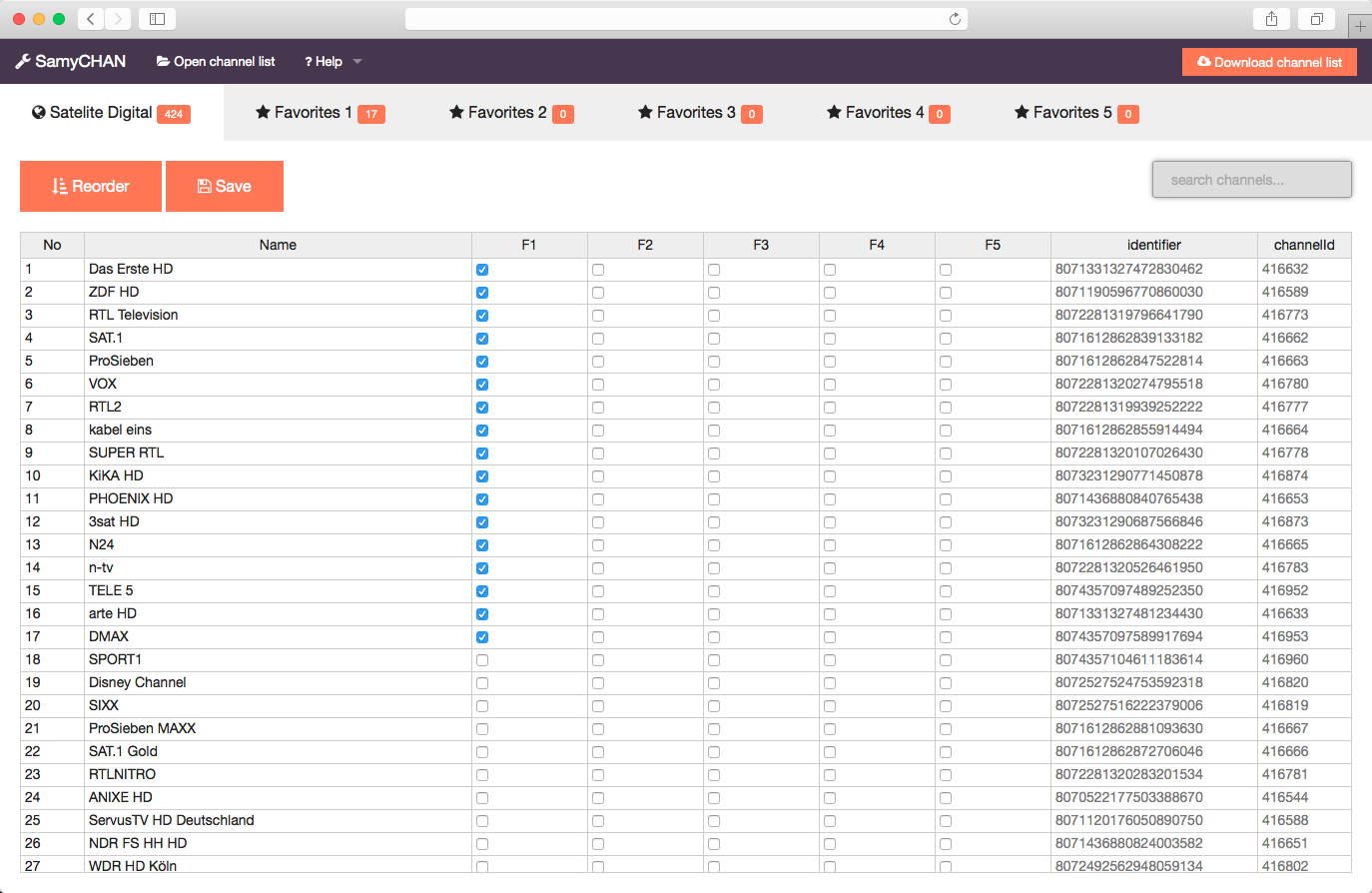
Have you ever had the problem sorting your channels on a Samsung TV? Editing all the channels by using the remote can be annoying. Specially if you need to do bigger changes to your channel list. SamyCHAN is the solution. You can download your channel list to a USB-Stick and open it with SamyCHAN. Now you can easily edit all your channels. Isn't that great?
Organize your TV's channel lists (digital, analog, dvbc, ...) and resort your channels easily.
Edit your channel names
Build and modify your favorites.
For the collector or curious cinephile, finding a clean copy of the 1980 original can be challenging. Due to its age and the degradation of master tapes, many digital versions available online are muddy transfers from third-generation VHS copies. However, boutique adult film restoration labels have recently begun releasing remastered editions.
If you are researching the history of independent film, the psychology of transgression, or simply want to understand why a "dirty movie" made in the Carter administration still resonates today, you must look up . Just be prepared: it is not a film that lets the viewer off the hook easily. It is raw, uncomfortable, and utterly unforgettable.
The film utilized professional lighting and film stock that rivaled independent B-movies of the era.
Third, it launched the career of Kay Parker, who remains a beloved and respected figure in the industry, and it created the archetype of the sexually aggressive, attractive older woman—a trope that has since become a mainstay in both adult and mainstream entertainment. taboo 1 1980
For film historians and retro cinema enthusiasts, Taboo remains a fascinating study in subversion. It is a reminder of a brief, chaotic epoch in American film history when the boundaries between underground exploitation and mainstream narrative cinema blurred, leaving behind works that continue to provoke, challenge, and fascinate audiences decades later.
The success of Taboo is inextricably linked to . Unlike many of her contemporaries, Parker brought a sense of maternal elegance and genuine acting ability to the screen. Her performance transformed Barbara Scott from a scandalous archetype into a character defined by vulnerability and inner conflict.
Clara arranged a small gathering in the fields one stormy afternoon. She stood beneath the clocktower with the program and the ledger, the gathered faces lit by lanterns and rain. She read aloud the entries—names, dates, the bracketed phrase. She told what she had learned: the pact, the profit, the dead. The rain washed words into the dirt and yet the sound carried. For the collector or curious cinephile, finding a
Word Count:
: She eventually finds herself developing an attraction to her son, exploring a extreme societal prohibition (the incest taboo).
At the helm was director Kirdy Stevens, who also served as the film's editor. Stevens had a distinctive style and a set of personal rules that shaped the final product. Most notably, he reportedly forbade the use of profanity in any of his films. This led to a famous on-screen moment where Kay Parker nearly says the "f-word" in a realty office scene but is forced to awkwardly correct herself mid-sentence; the scene remained in the final cut because a reshoot was not possible. A perfectionist, Stevens brought maximum intensity to the sex scenes and ensured the film had a polished, professional look that was rare for the genre. The screenplay was written and produced by his wife, Helene Terrie, with whom he frequently collaborated. If you are researching the history of independent
The legacy of Taboo is immense and double-edged. On one hand, it opened the floodgates for a subgenre of incest-themed pornography that quickly devolved into formulaic and often exploitative content, stripping away the psychological nuance that made the original unique. The "Mom" archetype became a hollow fetish. On the other hand, the film demonstrated that adult cinema could tackle genuinely uncomfortable subjects with a degree of artistic seriousness. It proved that a pornographic film could have a plot that was not just a flimsy excuse for sex, but a narrative engine that drove the sexuality itself. In this sense, Taboo is a quintessential document of the Golden Age’s dying breath—a moment when the genre still aspired to be a form of independent, transgressive cinema.
: The narrative tension peaks when Barbara acts on her impulses, leading to explicit, highly controversial scenes that defined the film's reputation. Production Values and Structural Design